Let’s be real: The golden age of “easy” solar ROI is fading. With the federal tax credits stepping down, the math for new buyers is harder than it was a few years ago.
If you are going to spend tens of thousands of dollars bolting infrastructure to your house in this new environment, you cannot afford to buy a science project. You need an appliance.
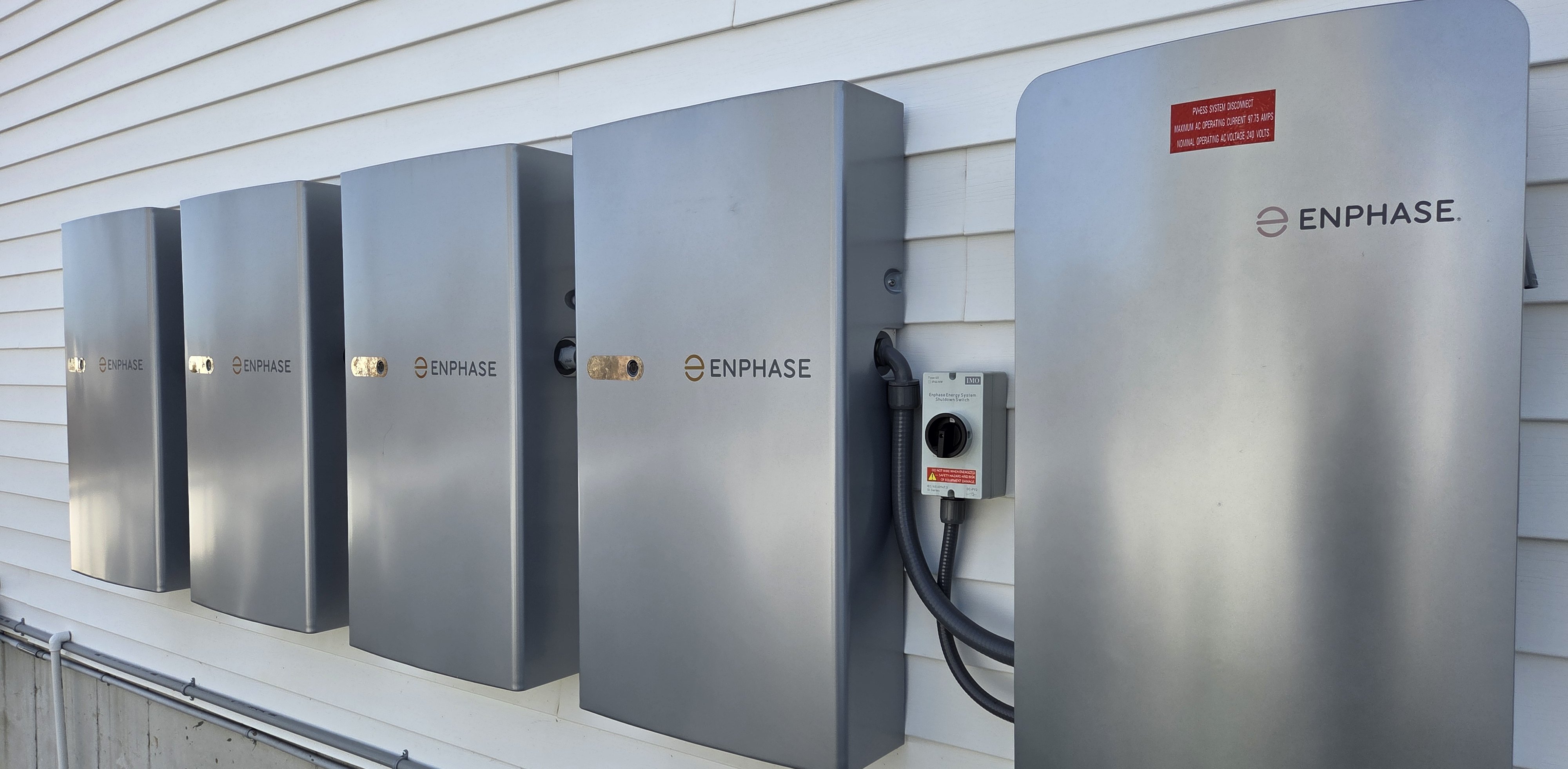
When I decided to take my home partially off-grid, I ran the numbers on everything—from DIY server-rack batteries to Tesla Powerwalls. I ended up choosing Enphase, specifically their new IQ Battery 5P system.
It was not the cheapest option. On paper, its financial ROI is slower than a string inverter system. But as a security professional, I don’t just look at ROI; I look at MTBF (Mean Time Between Failures) and risk exposure.
Here is why I paid the “Enphase Premium,” and why I think it’s the only viable choice for homeowners who want resiliency without becoming a part-time electrical engineer.
1. Killing the “Single Point of Failure”
In IT security, we hate centralized systems. If one critical router dies and takes down the whole company, that’s bad architecture.
Yet, that is how most standard solar works. All your panels feed into one giant “String Inverter” on the side of your house. If that one box pops a fuse on a hot July day, your entire 30-panel array goes dead.
Enphase is decentralized.
Every single solar panel on my roof has its own tiny computer (a Microinverter) underneath it. They operate independently.
- The Scenario: A baseball hits one panel, or a microinverter fails.
- The Result: I lose 1/30th of my production. The other 29 keep cranking out power.
I paid extra so that a minor hardware failure remains a minor annoyance, not a total system blackout.
2. The Chemistry: Why I Trust the “5P”
Batteries are not created equal. For years, the industry standard (like older Tesla Powerwalls or LG Chem) was NMC (Nickel Manganese Cobalt). These are energy-dense, but they are chemically stressed when sitting at 100% charge, and they degrade faster over time.
Enphase’s new IQ 5P batteries use LFP (Lithium Iron Phosphate).
- Safety: LFP is incredibly stable. It is almost impossible to force it into thermal runaway (catch fire).
- Longevity: It loves sitting at 100% charge—which is exactly where my batteries spend most of their time, waiting for a grid outage.
I am not buying a battery to cycle it every day to save fifty cents on arbitrage. I am buying a battery to sit there and be ready when an ice storm hits. LFP is the right tool for that job.
3. The Exit Strategy (Resale Value)
I don’t plan on dying in this house. Someday, I will have to sell it.
When you sell a house with a DIY solar setup, it scares buyers. They see wires and off-brand components and wonder who will fix it when it breaks. It can actually hurt your appraisal.
Enphase is the “iPhone” of solar. Home inspectors know it. Real estate agents know it. It has curb appeal.
More importantly, the IQ 5P comes with a 15-year warranty. Most competitors offer 10. Being able to hand a buyer a piece of paper guaranteeing free energy infrastructure for the next decade is a massive selling point. I paid for liquidity at the closing table.
The Verdict
If your goal is the absolute fastest financial return on investment, buy a string inverter and cheap batteries.
But if your goal is infrastructure that works like a refrigerator—boring, reliable, and there when you need it—the premium for Enphase is pennies on the dollar compared to the headache of a cheaper system failing during an outage.
I didn’t just buy solar to save money; I bought it to secure my home’s uptime. For that mission, Enphase was the clear winner.