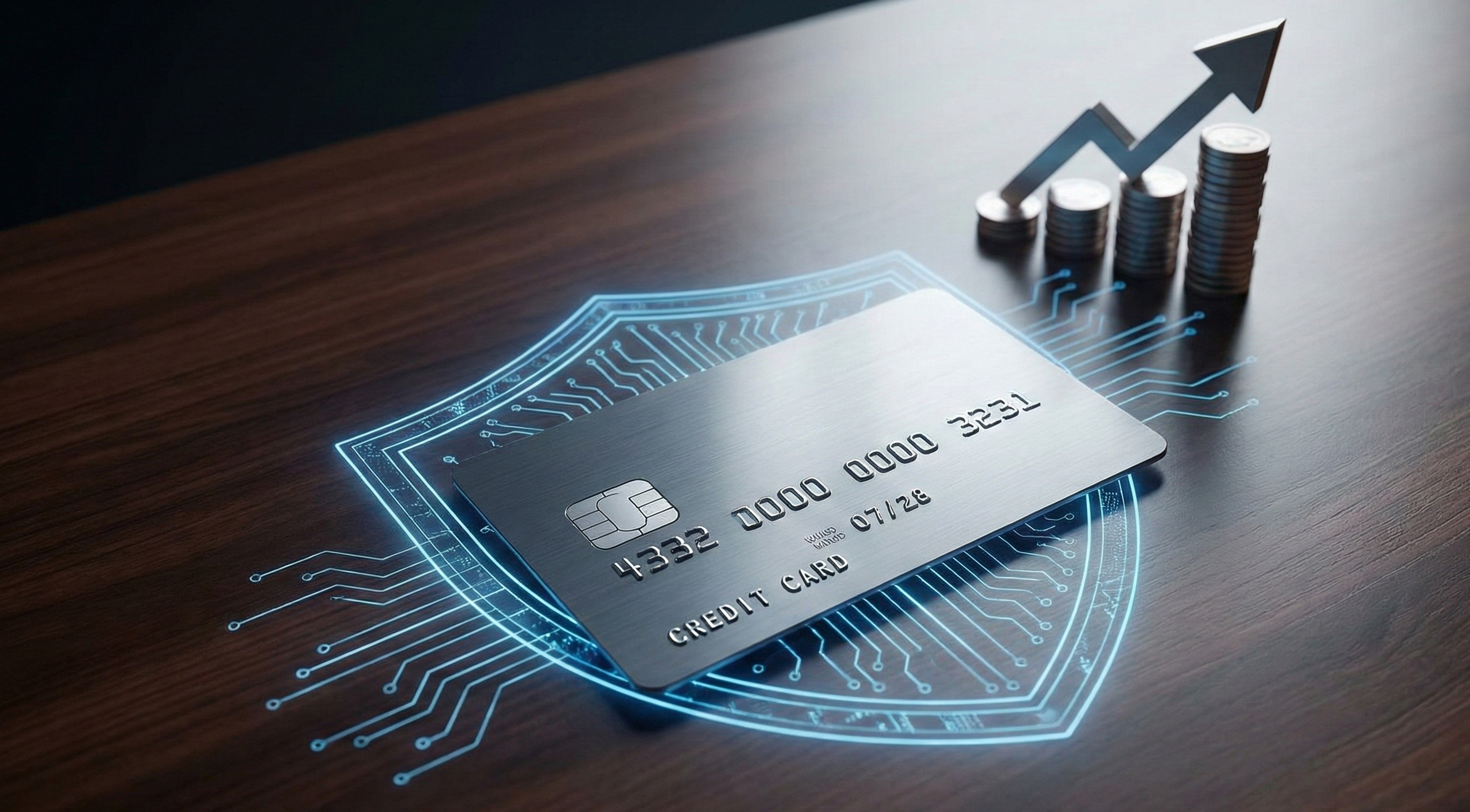
There is a common misconception that credit cards are purely tools for debt. If you treat them that way, they are. But if you treat them as tools for security and leverage, they are the first line of defense for your financial life.
I don’t use debit cards. I don’t even carry one unless I am going to the ATM. Here is why I prefer using the bank’s money instead of my own.
1. The Security Firewall
As a security professional, I look at risk. A debit card is a direct, hard-wired connection to your checking account—the same account that pays your mortgage and holds your paycheck.
If a debit card is compromised at a gas station skimmer or a shady website, the money disappears from your account instantly. Your rent check might bounce. Your utilities might get cut. You are now fighting to get your own money back while your account reads zero.
A credit card is a firewall. When I swipe a credit card, I am not spending my money; I am spending the bank’s money. If that card is compromised, the bank’s money is stolen, not mine. My checking account remains untouched, sitting safely behind the “Air Gap” while the issue is resolved by the bank.
2. Fraud Liability: The Bank’s Fight
When fraud happens on a debit card, you are often guilty until proven innocent. You have to prove you didn’t buy that TV in Russia.
When fraud happens on a credit card, the script flips. You simply flag the transaction, and the charge is removed. Why? Because it’s the bank’s money on the line. They have billion-dollar fraud detection systems and legal teams designed to fight for their capital. I prefer to have them fighting on my behalf.
3. The 0% “Float” (OPM)
Robert Kiyosaki often talks about OPM—Other People’s Money. A credit card is the most accessible form of OPM available.
If I buy a $1,000 laptop on the 1st of the month, and my bill isn’t due until the 25th of the next month, I have effectively taken a 55-day interest-free loan from the bank and rewarded with points for doing it.
During those 55 days, my actual $1,000 stays in my High-Yield Savings Account (HYSA), earning me interest. I keep the liquidity until the very last second. That is financial efficiency. If i get 3% from the HYSA .25% and 1% cash back from the purchase i got 1.25% back (the math is more complicated than that).
4. Purchase Protection
Cash has no undo button. Debit cards have a weak undo button. Credit cards have a team of lawyers.
Most premium credit cards come with built-in insurance:
- Extended Warranty: They often double the manufacturer’s warranty automatically.
- Purchase Protection: If you buy an item and it breaks or gets stolen within 90 days, the card issuer may refund you.
- Chargebacks: If a merchant scams you or sends a broken product and refuses a refund, the credit card company can force the money back.
5. Rewards: The Discount on Life
This is the cherry on top, not the cake. But if you are disciplined, it adds up. By using a card that offers 2% cash back, you are effectively giving yourself a 2% discount on everything you buy for the rest of your life. Over 30 years, that compounding discount is substantial.
The One Rule
This system only works if you follow one binary rule: Pay the statement balance in full, every single month.
WARNING: The Minimum Payment Trap
Myth: “As long as I make the minimum payment, I’m fine.”
Reality: Minimum payments are designed to keep you in debt, not get you out. Most issuers set the minimum at roughly Interest + 1% of the balance. Because you are barely paying down the principal, the interest compounds against you for decades.
The Math: If you have $5,000 in debt at 20% interest and only pay the minimum:
- Time to payoff: Over 22 years.
- Total Interest Paid: $7,000+.
- Total Cost: That $5,000 purchase eventually costs you $12,000.
If you pay even one cent of interest, the math breaks and the bank wins. But if you treat the credit card like a debit card—never spending money you don’t already have sitting in the bank—you get the security, the protection, and the rewards for free.
Read Next
Now that you have secured your spending, let’s talk about securing your retirement from taxes. 👉 The 100k Illusion: Why Your Salary Tax isn’t Your Retirement Tax
Disclaimer: This content is for educational purposes only and does not constitute financial advice. I am not a financial advisor. Please consult with a qualified professional before making financial decisions.
Transparency: This post may contain affiliate links. As an Amazon Associate, I earn from qualifying purchases. I also earn commissions from other programs (like credit card referrals) if you click my links. This supports the site at no cost to you.
These are the cards I use to secure my spending and earn the “Discount on Life.”
Chase Sapphire Reserve® / Preferred®
Use case: My primary driver for travel and dining. The “Pay Yourself Back” feature and 3x points on travel are the backbone of my points strategy.
- Current Offers:
- Preferred: Earn 60k–75k points. (Best for solid travel/rental insurance and travel multipliers).
- Reserve: Earn 125k points. (My pick if you value luxury perks like airport lounges).
Referral: Chase Sapphire
Get Deal
Capital One Venture X
Use case: The “Catch-All” card. I use this for the 2x miles on everything else. It effectively pays for itself with the $300 travel credit and 10k anniversary miles.
- Current Offer: Earn 75,000 bonus miles once you spend $4,000 on purchases within the first 3 months.
- Note: This link also works for excellent no-fee options like QuickSilver (Cash) or Venture One (Travel).
Referral: Capital One
Get Deal